
Best Chinese E-commerce Platforms for International Buyers: Top Sites Compared
 MortyUpdated January 23, 20264 Mins read
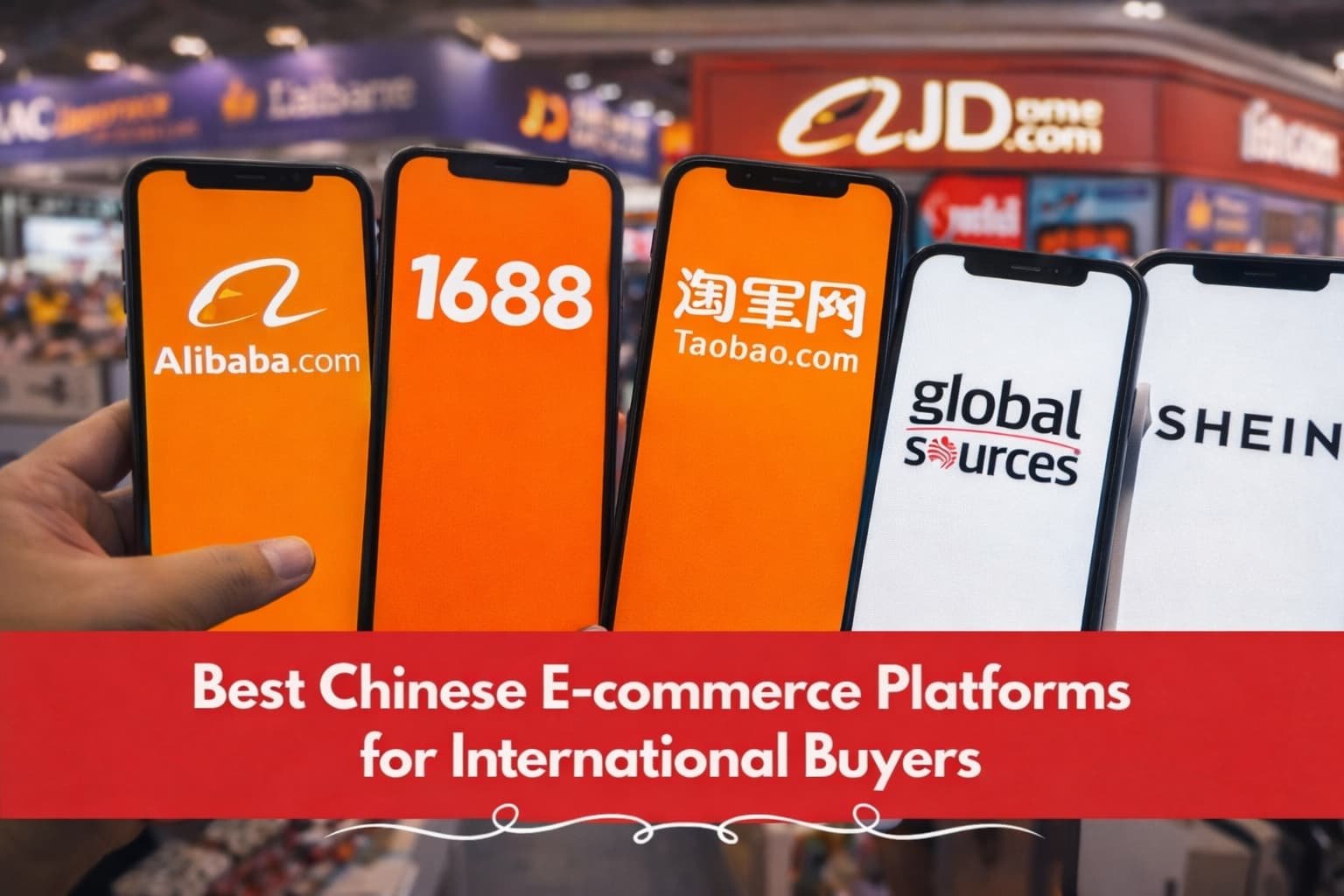
If you’re buying from China as an international buyer, the real problem is not “where to click.” It’s figuring out which platform matches what you’re doing: one-off shopping, small wholesale, or serious sourcing.
China’s e-commerce ecosystem is huge and still growing. The U.S. International Trade Administration points out that China is the world’s largest online retail market and expects continued growth in the coming years. On the cross-border side, official data cited by Science and Technology Daily says China’s cross-border e-commerce exports hit 2.15 trillion RMB in 2024 (with total cross-border trade volume 2.71 trillion RMB).
Translation: there are a lot of legit sellers, a lot of bad sellers, and a lot of platforms designed for different goals.
This guide is my practical directory-style comparison, from the perspective of someone living in Guangzhou and regularly dealing with “international buyer” problems: shipping, customs, MOQs, payments, quality control, and not getting stuck with useless products.
Quick picker: choose your buyer type
Pick the line that matches you, then jump to the platforms that fit.
- “I’m buying 1–5 items for myself” → Go to: AliExpress, Temu, Shein
- “I want small wholesale (10–200 pcs) without running a full sourcing project” → Go to: DHgate, Alibaba.com (low MOQ listings)
- “I’m sourcing for a real business (factories, samples, compliance)” → Go to: Alibaba.com, Made-in-China, Global Sources
- “I want China-domestic prices (Taobao/1688), and I can handle forwarding/agents” → Go to: Taobao, 1688 (with a forwarding/agent workflow)
Top Chinese e-commerce platforms compared (directory table)
| Platform | Best for | Typical MOQ | Payments | Shipping | Main risk | My quick verdict |
|---|---|---|---|---|---|---|
| AliExpress | small orders, casual shopping | 1 | card + local options | direct intl shipping | uneven quality, listings can be misleading | best “easy mode” for random buys |
| Temu | cheap impulse buys | 1 | card | direct intl shipping | quality inconsistency, returns can be annoying | good for cheap stuff you don’t care about |
| Shein | fashion basics | 1 | card | direct intl shipping | sizing/material surprises | decent for clothing, not for “quality sourcing” |
| DHgate | small wholesale + “factory-ish” lots | 2–200 | card/escrow-style | direct + agents | counterfeit/brand issues, QC | okay for cheap wholesale if you’re careful |
| Alibaba.com | real B2B sourcing | samples to bulk | Trade Assurance options | freight + forwarders | supplier verification + spec mistakes | best all-around for business sourcing |
| Made-in-China | industrial goods + verified suppliers | samples to bulk | bank/card varies | freight | slower comms sometimes | strong for machinery/industrial categories |
| Global Sources | vetted suppliers + higher-end sourcing | samples to bulk | varies | freight | fewer “tiny sellers” | better when you care about credibility |
| 1688 | cheapest China-domestic wholesale | usually higher | RMB + China-focused | needs agent/forwarder | language + returns + shipping complexity | best prices, hardest workflow |
| Taobao | China-domestic retail variety | 1 | RMB + China-focused | needs forwarder | language + seller variety | great for “China-only” items, not B2B |
| JD (domestic) | authentic-ish domestic retail | 1 | China-focused | limited intl | access + language | useful if you live in China, not ideal abroad |
Two important notes before you pick:
- “Chinese platform” does not always mean “ships internationally.” Taobao/1688 are domestic-first, so you usually need a forwarding address or agent.
- If you’re buying anything that might be counterfeit or brand-infringing, you’re gambling with customs seizure and wasted money. DHgate is famous for cheap “alternatives,” and even mainstream platforms get scrutiny for illegal/counterfeit listings.
My top recommendations (if you just want the answer)
Best for personal shopping (B2C)
- AliExpress: widest selection, easiest flow
- Temu: cheapest impulse-buy lane (quality varies, obviously)
- Shein: best for fashion basics
Best for small wholesale without a full sourcing project
- DHgate: small-lot wholesale is the point (be strict with seller ratings and photos)
- Alibaba.com: look for “Ready to Ship” and low-MOQ listings, and use Trade Assurance when possible
Best for serious business sourcing (B2B)
- Alibaba.com: biggest ecosystem + structured sourcing tools + Trade Assurance options
- Global Sources: stronger “supplier credibility” vibe, better for mid-to-high-end sourcing
- Made-in-China: strong for industrial categories
Best prices (but hardest for international buyers)
- 1688: domestic wholesale pricing, huge variety, not designed for foreigners
- Taobao: domestic retail variety, great for “China-only” products
What each platform is actually good for (with examples)
AliExpress (personal buys): phone accessories, home gadgets, small electronics, random household stuff.
Temu (ultra-cheap): basic home items, small tools, “I don’t care if it lasts 2 years” buys.
Shein (fashion): basic clothing and accessories where you accept sizing variance.
DHgate (small wholesale): unbranded accessories, packaging, basic apparel lots, low-budget store inventory.
Alibaba.com (B2B): custom products, OEM/ODM, larger lots, factory relationships, compliance requests.
1688/Taobao (domestic): packaging, components, niche items, domestic-only brands, and “the exact thing you saw in a China video.”
My safe buying workflow (works on almost every platform)
If you copy one section from this post, copy this.
Step 1: Define the spec before you message anyone
- Material, size, weight, color, power standard (if electronics), packaging needs
- Photos help. Measurements help more.
Step 2: Shortlist sellers like you’re hiring staff
- Look for consistent reviews/ratings, repeat buyers, clear photos, detailed descriptions
- Avoid new stores selling everything under the sun.
Step 3: Ask 5 questions (and don’t skip them)
- “What’s the exact material/composition?”
- “What’s the unit weight and packaging size?” (shipping costs live here)
- “What’s MOQ and price tiers?”
- “Can you send real photos/videos of the exact item?”
- “What’s the delivery method and delivery time to my country?”
Step 4: Samples before bulk (always)
If the seller won’t do samples, that’s your answer.
Step 5: Protect the payment
- On Alibaba, use Trade Assurance when it makes sense
- On consumer platforms, keep everything inside the platform and don’t “pay off-platform.”
“Which platform should I use?” decision table
| Your goal | Best platform | Backup | Why |
|---|---|---|---|
| Buy a few items cheaply | AliExpress | Temu | easiest global shipping |
| Buy clothes cheaply | Shein | AliExpress | best product category fit |
| Buy 50–200 units fast | DHgate | Alibaba (low MOQ) | small wholesale flow |
| Find real factories | Alibaba.com | Global Sources | best B2B structure |
| Industrial/machinery sourcing | Made-in-China | Alibaba.com | category strength |
| Lowest China-domestic pricing | 1688 | Taobao | domestic-first pricing |
Common mistakes I see international buyers make
- Choosing the cheapest item, then acting shocked when shipping doubles the cost.
- Ordering bulk without a sample because “the photos looked fine.”
- Mixing “personal shopping” platforms with “business compliance” expectations.
- Buying brand-risk items and then blaming customs when it gets seized.


Best Eyeglass Stores in Yuexiu District (Guangzhou): Top Places to Get Glasses
My directory for eyeglass store Yuexiu District: where I go for cheap...
MortyMarch 30, 2026
Best Sports Markets in Guangzhou: Top Wholesale Spots for Gear, Sportswear & Sneakers
Guangzhou’s top sports markets: sporting goods, teamwear, athleisure, and sneaker wholesale. Bilingual...
MortyFebruary 2, 2026
Best Guangzhou Motorcycle Parts Wholesale Markets: Top Places to Buy Spares & Accessories
A guide to Guangzhou’s best motorcycle parts wholesale markets, with bilingual names,...
MortyJanuary 29, 2026


Best Home Decoration Markets in Guangzhou: Top Places to Buy Decor & Furniture
Guangzhou’s best home decoration markets, from small decor wholesale (Yide Rd) to...
MortyJanuary 27, 2026

Leave a comment